


Palya Proper Fine Art
Aboriginal Art for Sale: Original Paintings
Original works from the Central and Western Desert, documented, certified and mostly sourced straight from the artists who painted them.
Original paintings from the desert, since 2007
Browse original Aboriginal paintings by artists from the Central and Western Desert, from Utopia to the Pintupi homelands. Palya Proper Fine Art has worked with these artists since 2007, and most of the works here come to us directly from the people who painted them. Each painting is a one-off, documented with its artist, Country, size and year, and comes with a Certificate of Authenticity.
What is Aboriginal art?
Aboriginal art is not a single style. Australia’s First Peoples belong to hundreds of distinct nations and language groups, each with its own Country, ceremony and visual language, so a painting from Utopia looks nothing like one from the Western Desert.
The tradition itself is ancient, carried for thousands of years through rock art, body paint, carving and designs drawn in sand. What is recent is the canvas. In 1971 at Papunya, senior men began putting those designs onto board and later linen, and the painting movement we know today grew from that moment.
Each artist paints the knowledge they hold the right to share, and the meaning of a work belongs to them and their community. Where an artist has told us the story of a painting, we pass it on in their words. Where they have not, we leave it unsaid.
Where to start
Shop Aboriginal paintings by artist or collection


Available original Aboriginal paintings
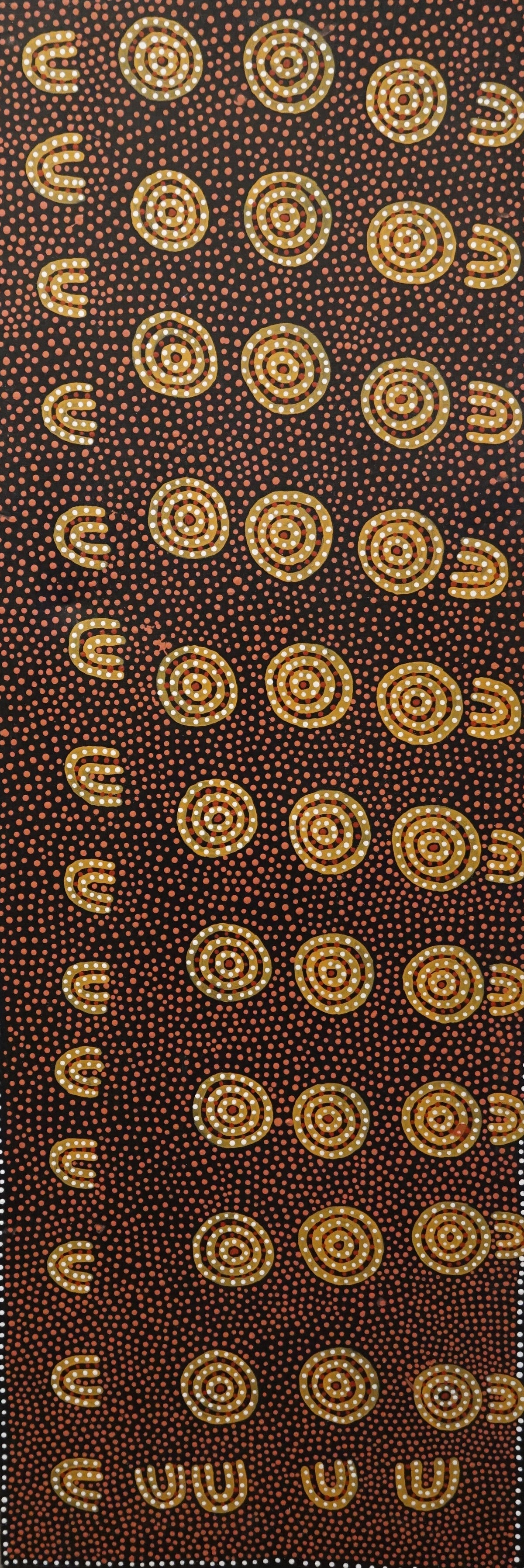
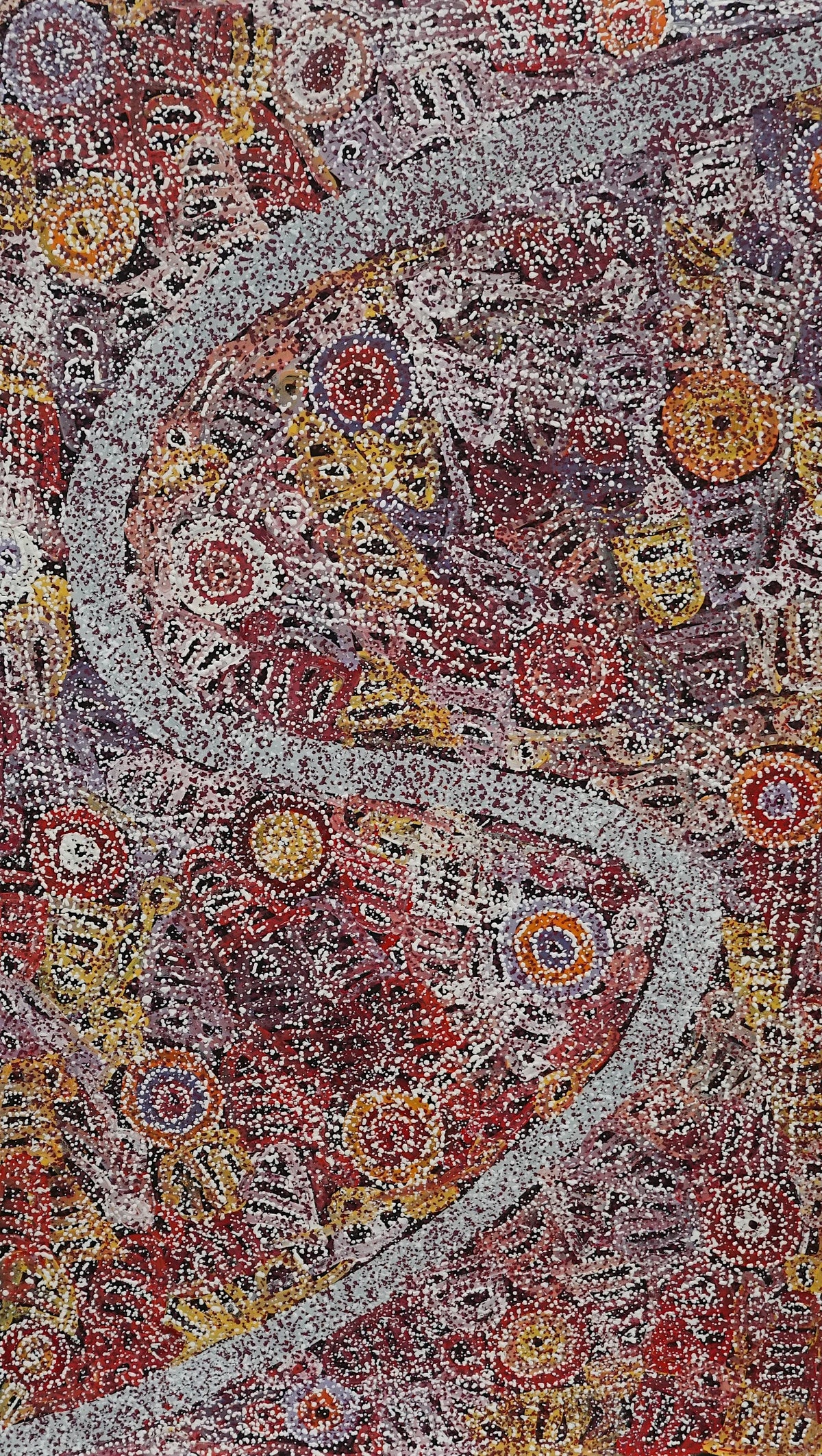
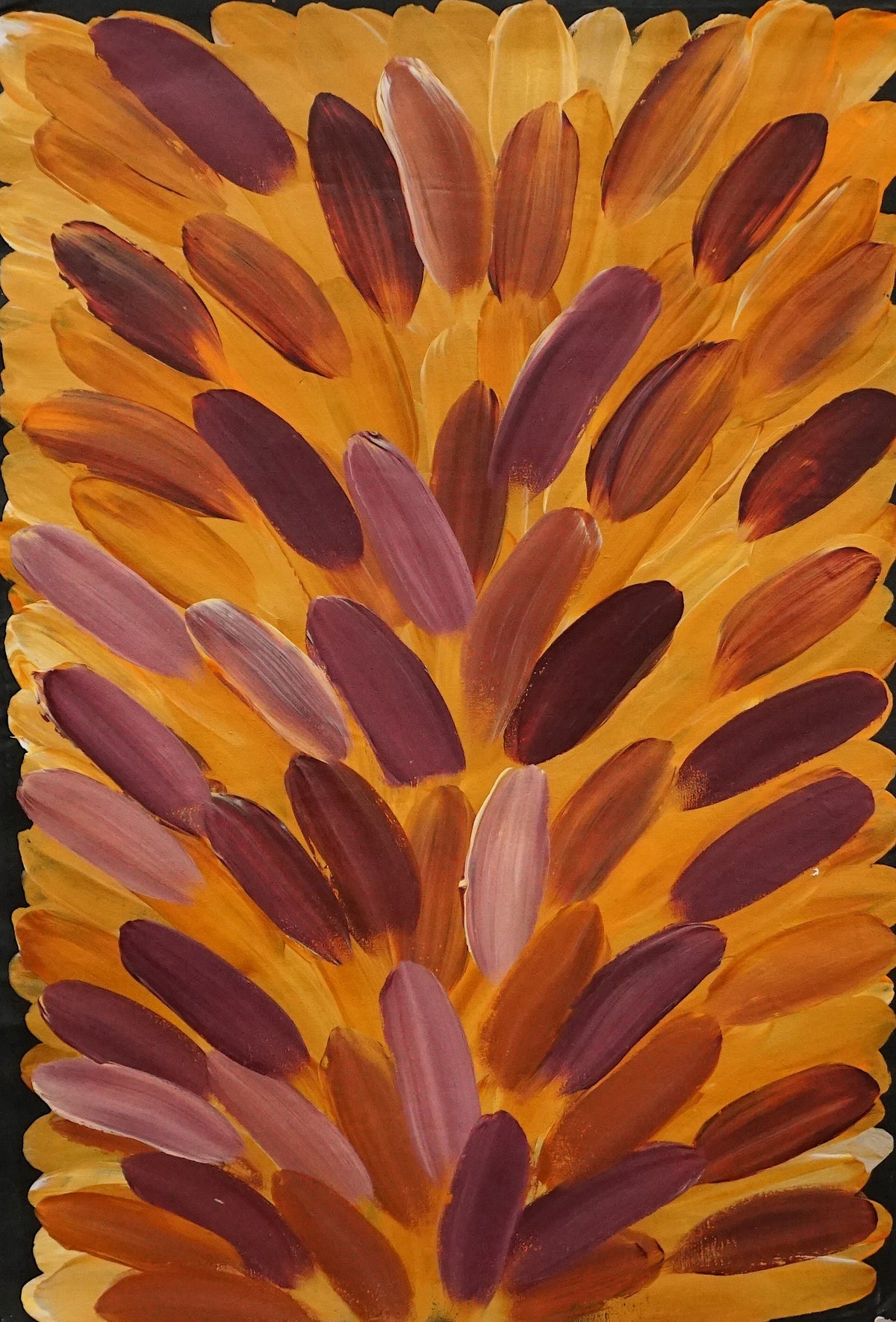

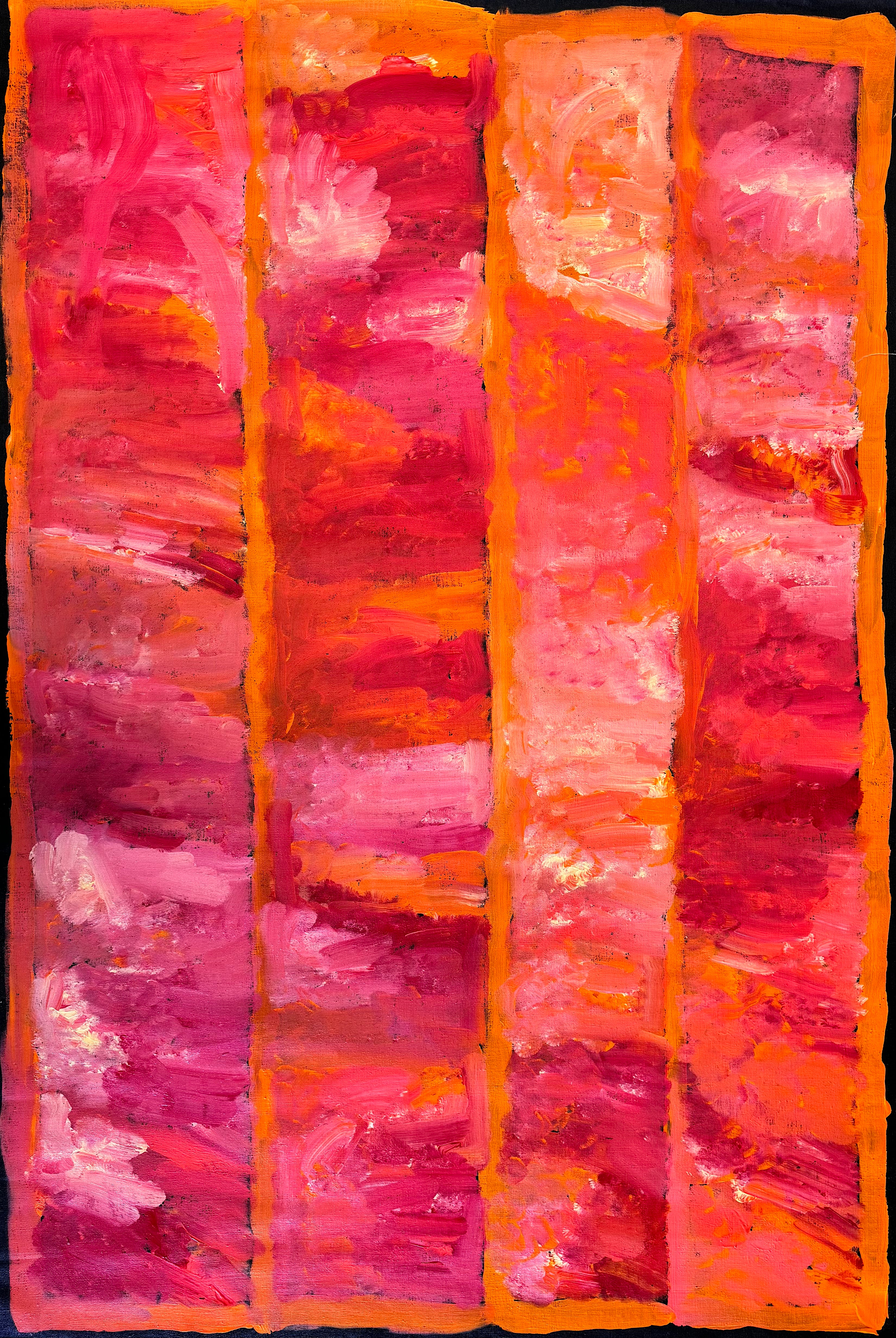
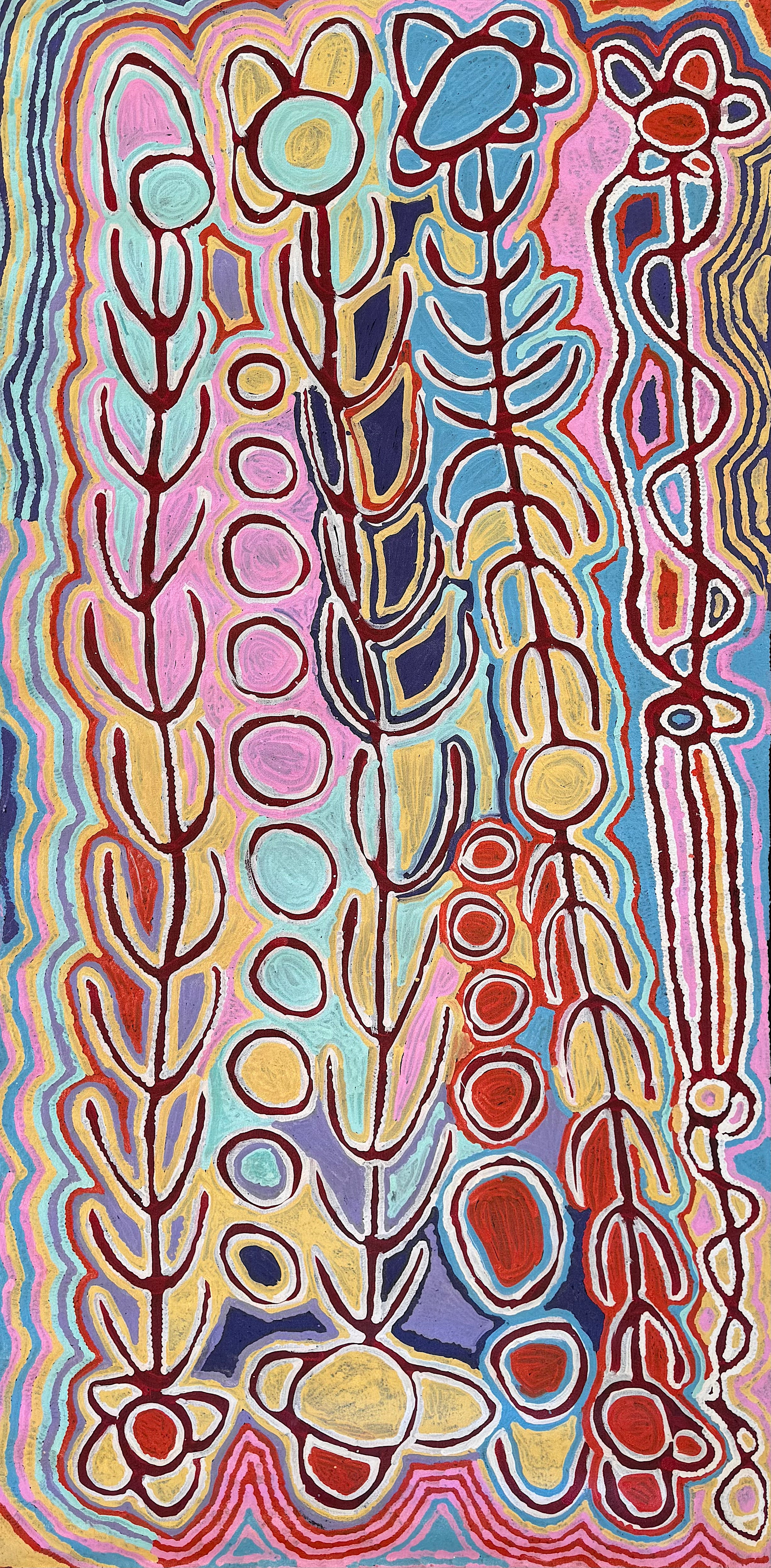
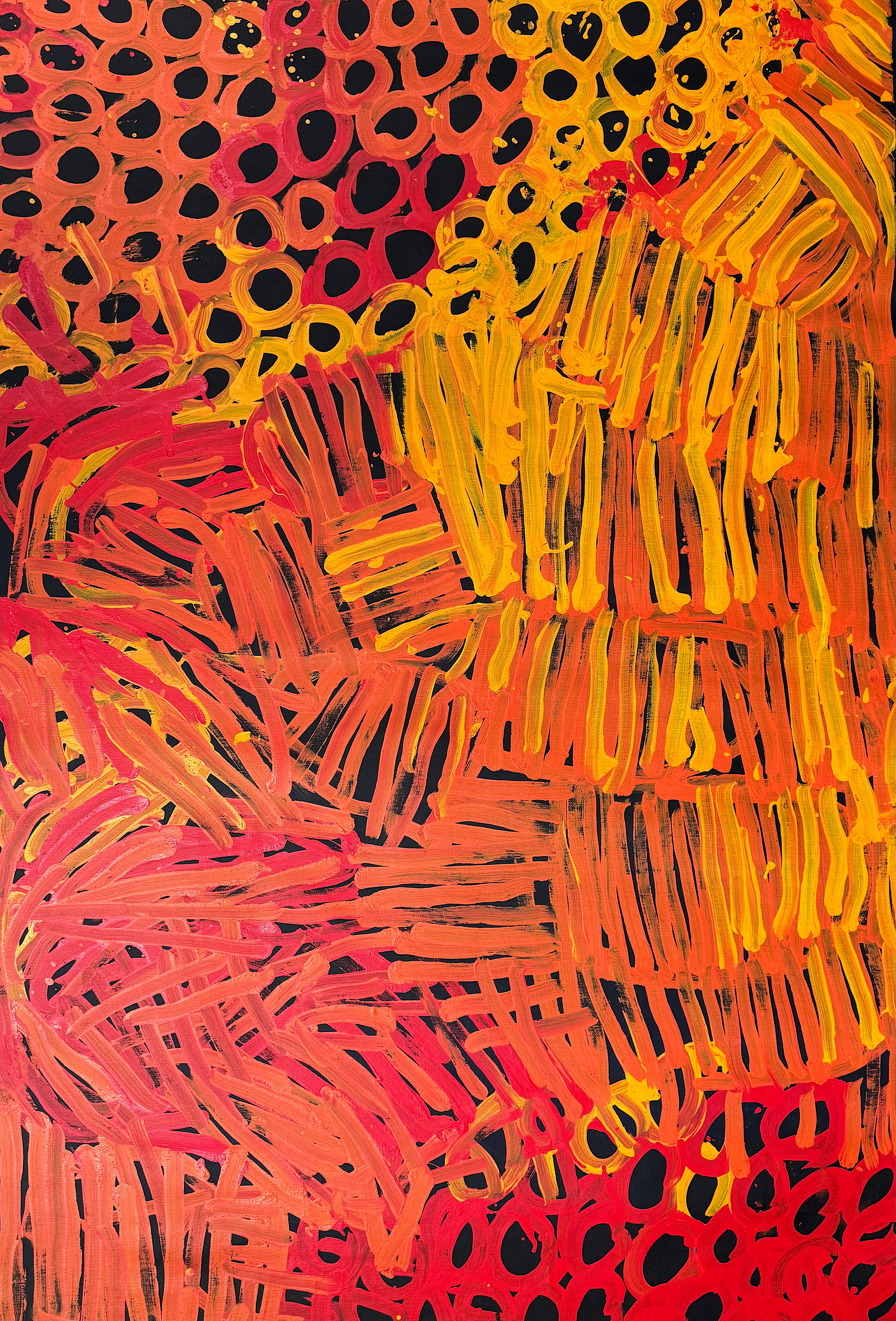
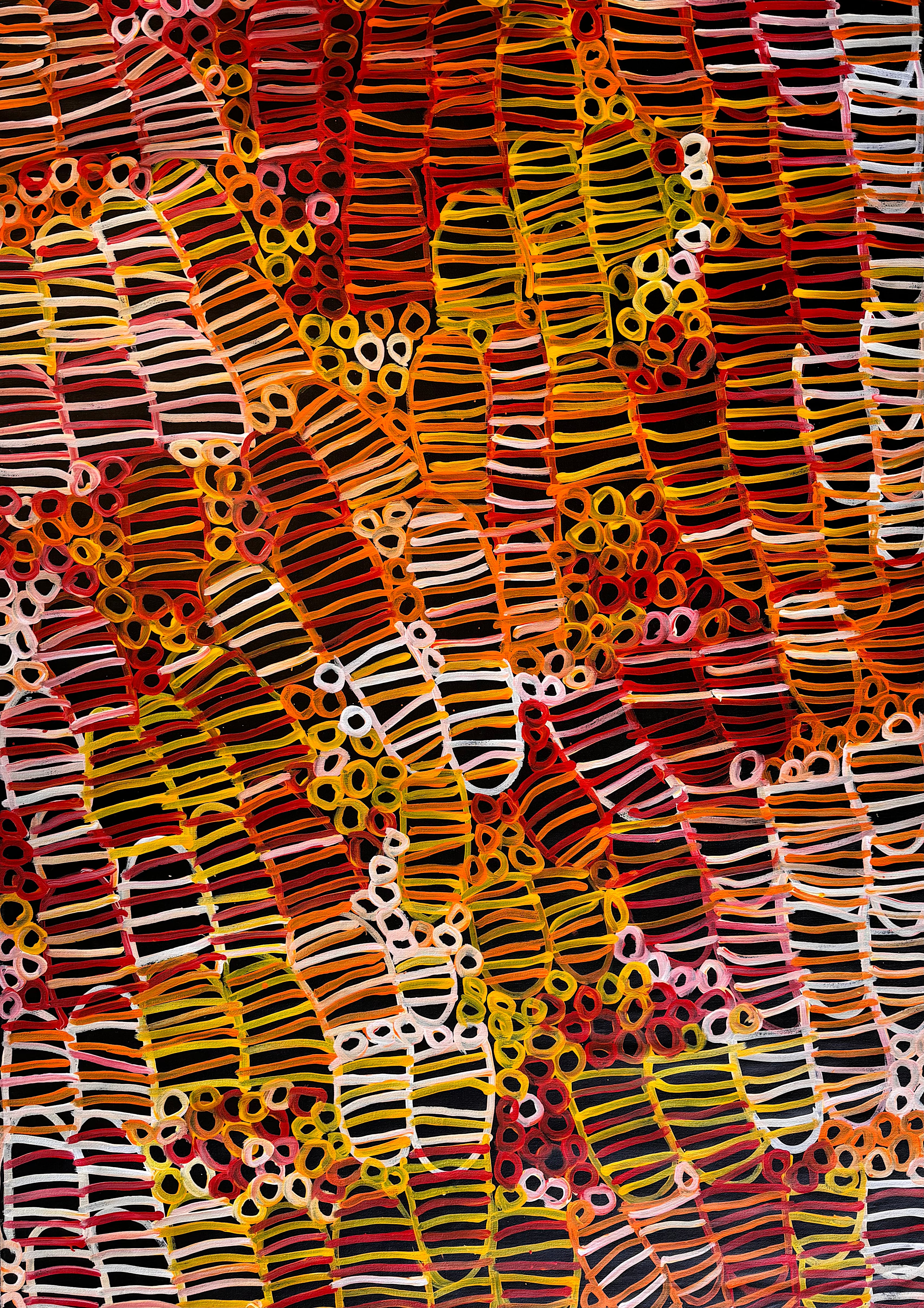
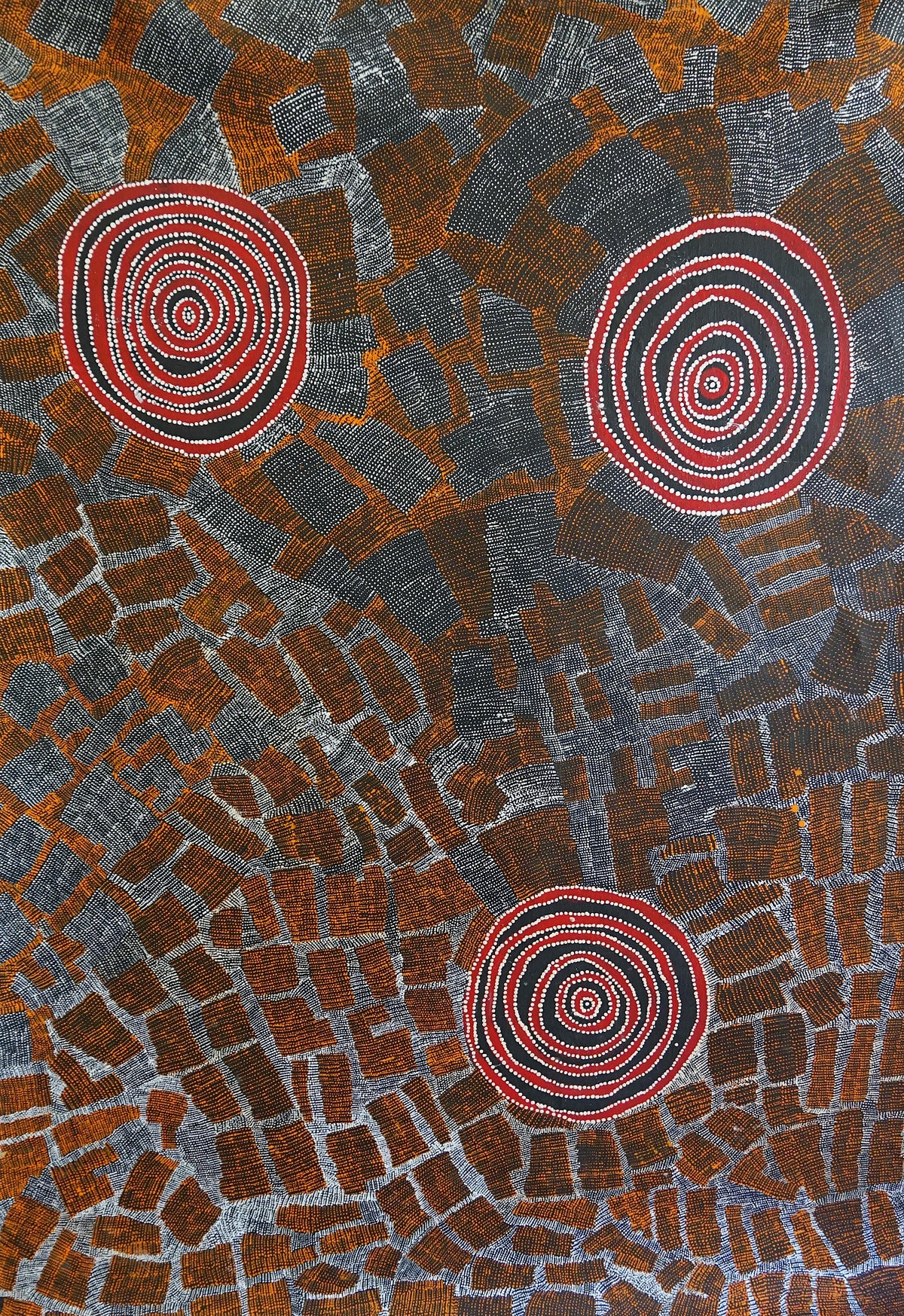
Utopia and Western Desert Aboriginal paintings
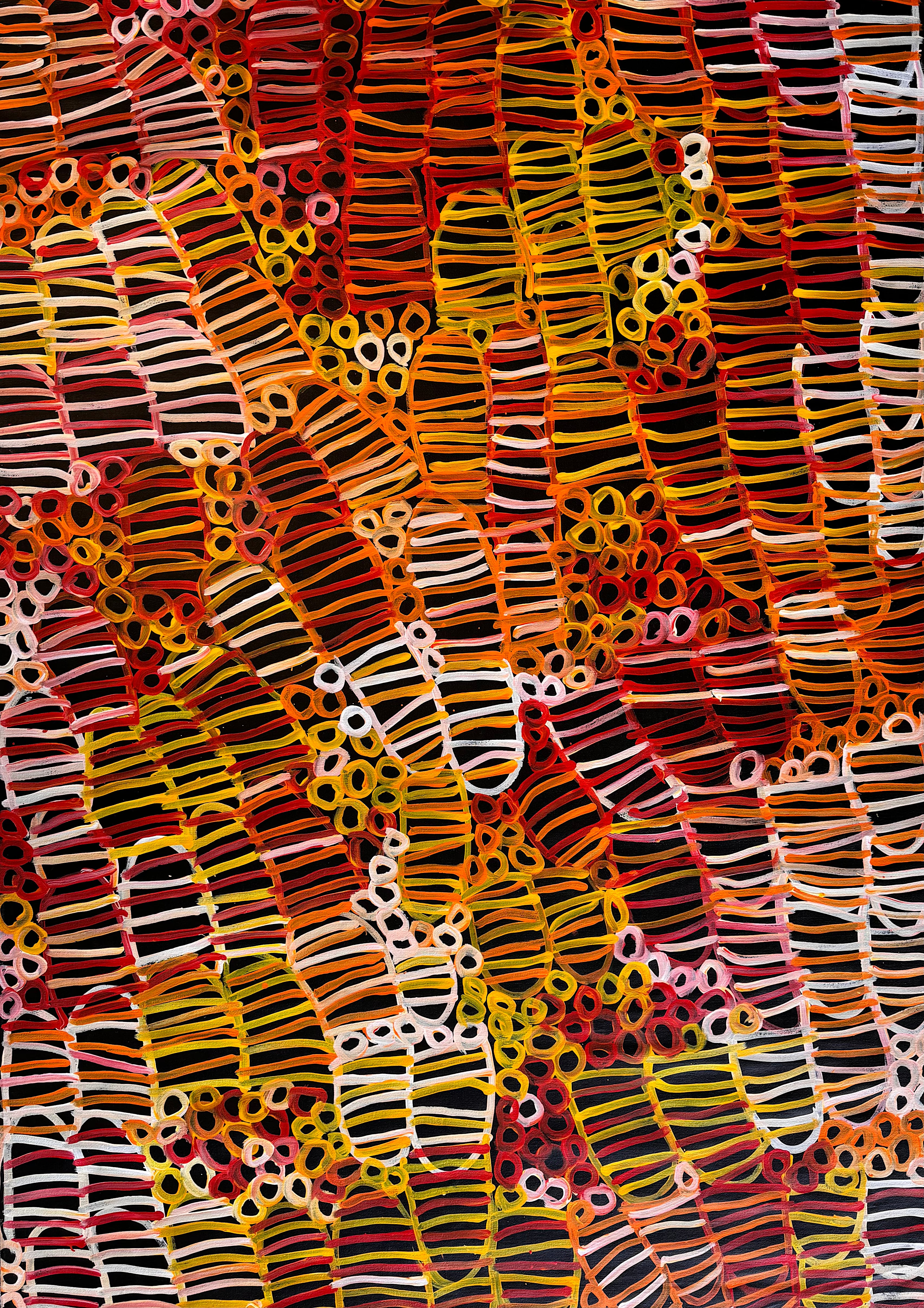
Aboriginal art is not one style. The paintings in our collection come from many different families, language groups and Country, and each artist paints the stories and knowledge they have the right to share. Some, like the Petyarre and Pwerle families of Utopia, are known for fine, layered brushwork of bush medicine leaves and body-paint designs. Others, from the Western Desert, work in the dotted fields and roundels that grew out of the painting movement that began at Papunya in the early 1970s.
Browse by artist, explore our Collector's Gallery, or ask us for something specific. Our stockroom holds more work than we can list online.
How we work
Straight from the artists
We have worked with artists and their families from the Central and Western Desert since 2007, and most of the paintings we sell come to us directly from the people who made them. That is why every listing can name the artist, their language group, their Country and the year the work was painted.
Each painting is catalogued with its medium and size, and is supplied with a Certificate of Authenticity and, for most works, a photograph of the artist with the finished painting. Our stockroom holds more than we can list online, so if you have something particular in mind, ask us.
Featured Aboriginal artists

Kudditji Kngwarreye
Eastern Anmatyerre elder from Utopia (1928-2017) and younger brother of Emily Kame Kngwarreye, best known for his colourful, layered My Country paintings.

Gloria Petyarre
Anmatyerre artist from Utopia (c. 1945-2021), one of the seven Petyarre sisters, celebrated for her Bush Medicine Leaves paintings.

Yannima Tommy Watson
Senior Pitjantjatjara artist from Irrunytju, WA (c. 1935-2017), known for bold colour and energetic movement. His work is held by major Australian galleries.

Jeannie Petyarre
The youngest of the Petyarre sisters of Utopia and a niece of Emily Kame Kngwarreye, known for her bush medicine leaf paintings.

Polly Ngale
Senior Anmatyerre custodian of Alparra, Utopia (c. 1936-2022), renowned for her layered Bush Plum (Arnwetky) paintings.

Charmaine Pwerle
Utopia artist, daughter of Barbara Weir and granddaughter of Minnie Pwerle, inspired by her grandmother's Country, Atnwengerrp, and awelye.
Where these paintings come from
Painting on canvas in the desert is only about fifty years old. These are the moments that shaped the work we sell.
Papunya, Northern Territory
The first paintings on board
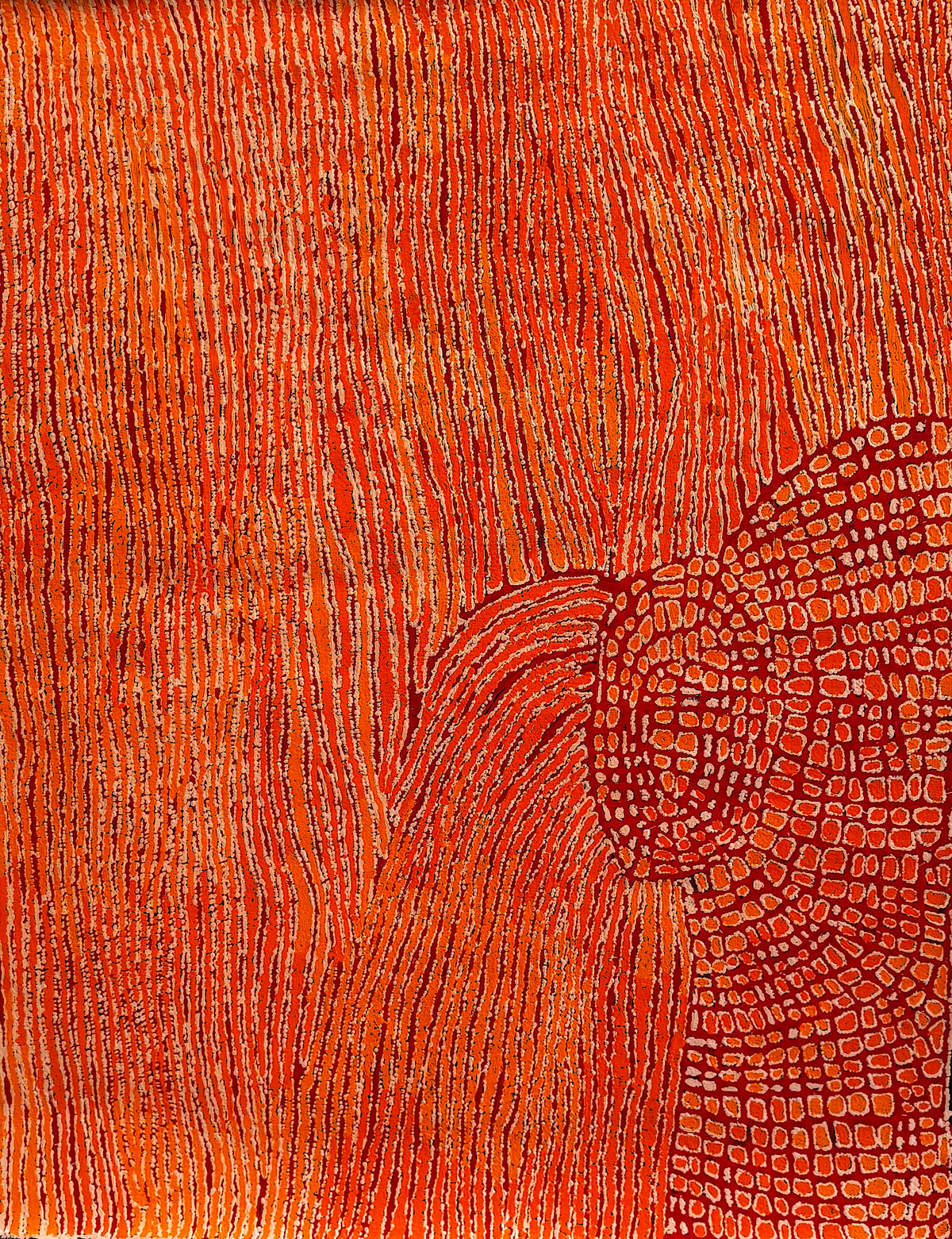
At Papunya, west of Alice Springs, senior men began putting ceremonial designs onto board and canvas in 1971, working alongside the teacher Geoffrey Bardon. Their own company, Papunya Tula Artists, followed in 1972, and the Western Desert painting movement grew out of it.
Utopia, Northern Territory
Utopia women take up canvas
Women at Utopia had been working in batik on silk since the late 1970s. Given canvas and acrylic for the first time over the summer of 1988-89, they produced a body of work that introduced artists including Emily Kame Kngwarreye, Gloria Petyarre and Polly Ngale to the wider world.
Paintings by Polly NgalePalya Proper Fine Art
We open our doors
We began working with desert artists and their families in 2007. Galleries around Australia now source works from us, and most of what we sell still comes straight from the artists.
See what is availableGallery
A closer look at our Aboriginal paintings
A few of the paintings in our collection. Browse everything that is available, or ask us what else is in the stockroom.


Why buy from Palya Proper Fine Art
From the Collector's Gallery


In your home
Discover Aboriginal art for your home
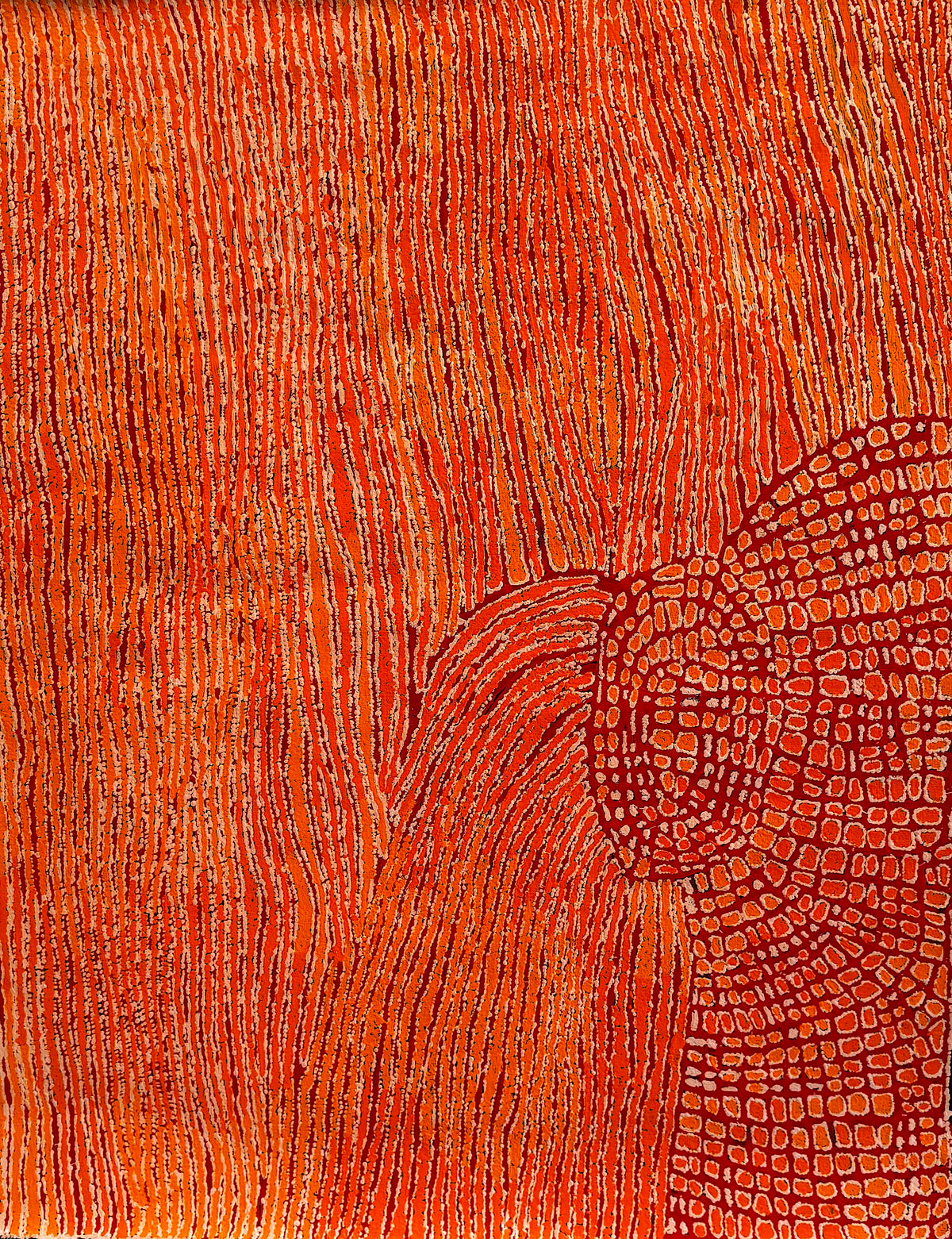
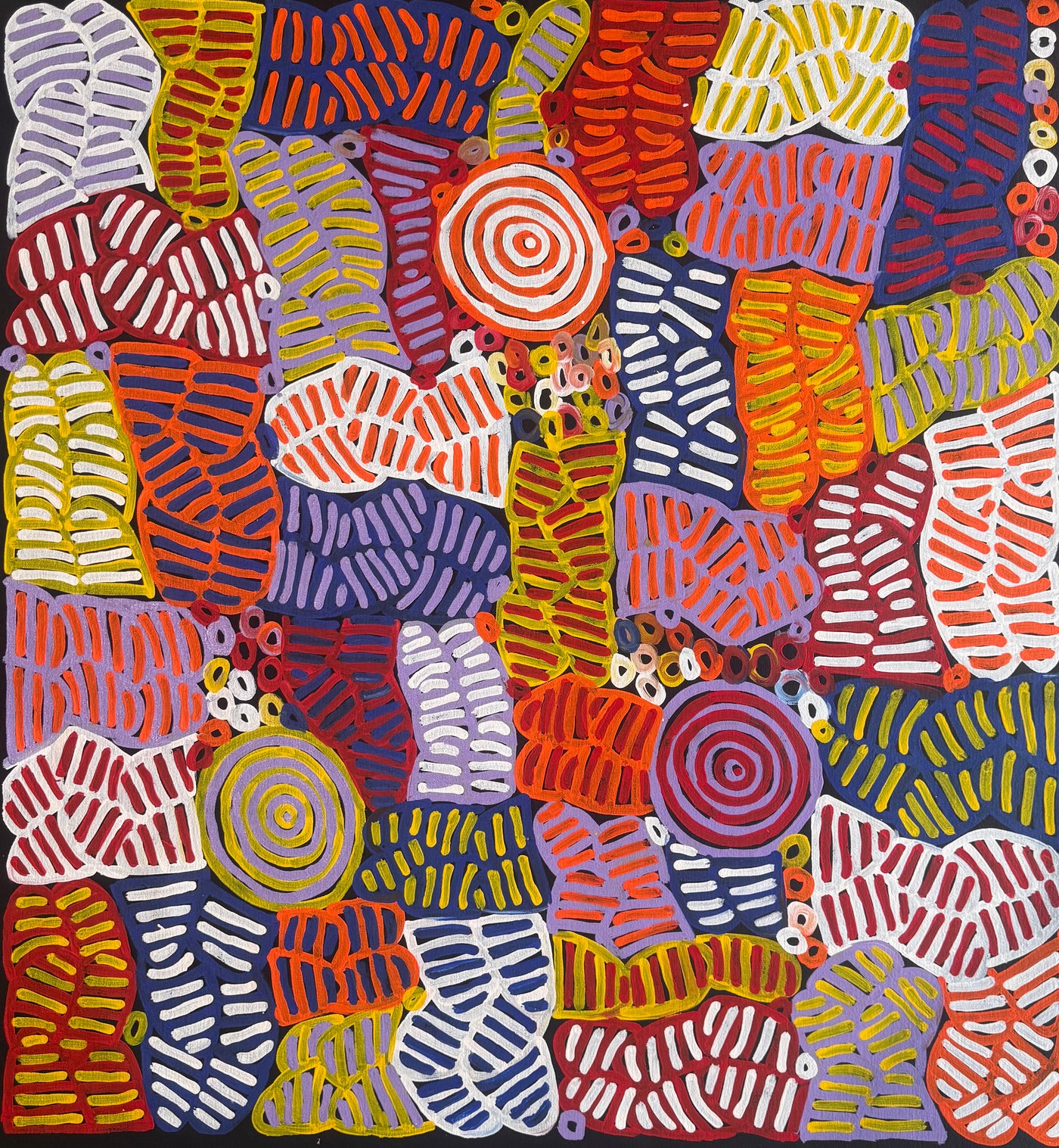
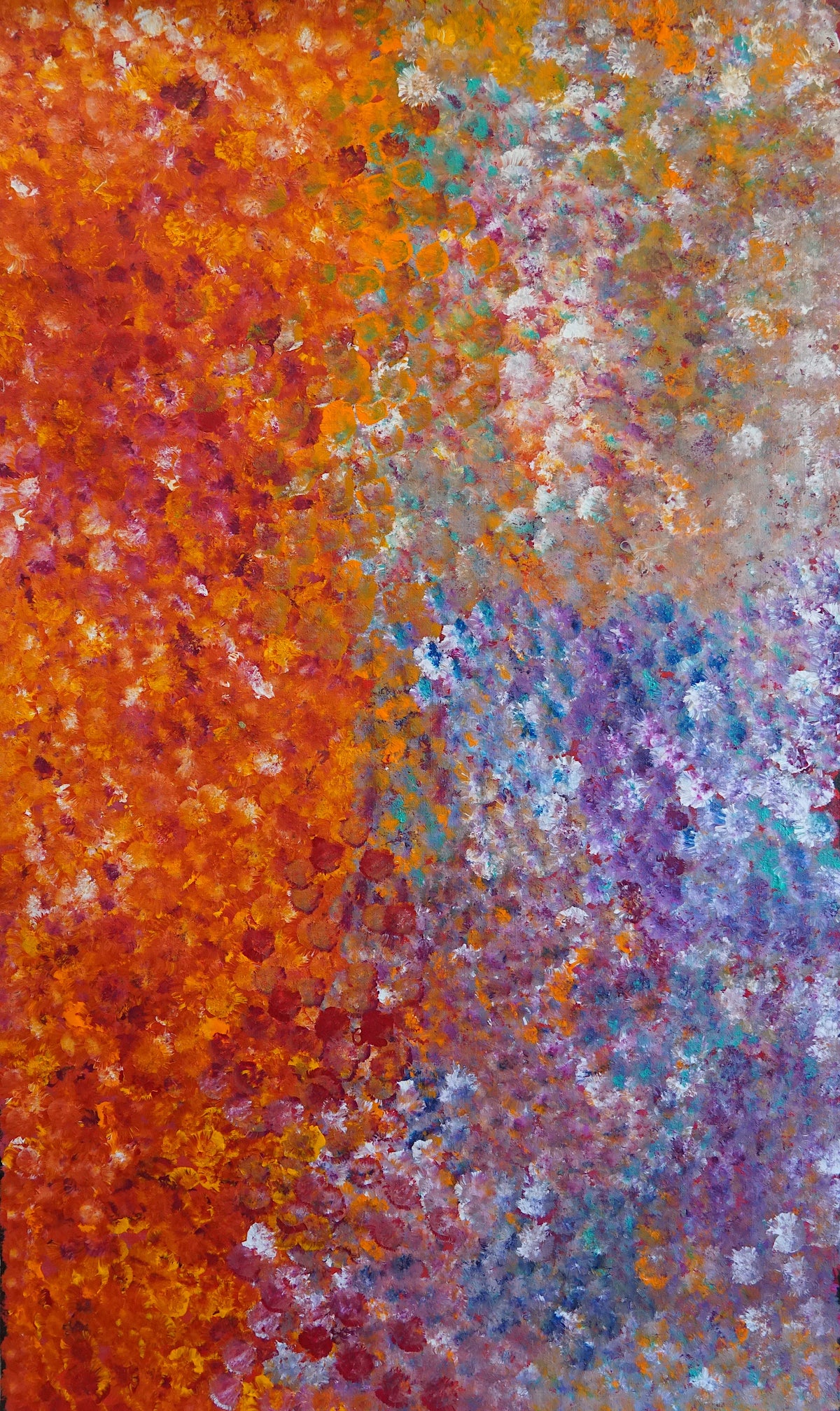
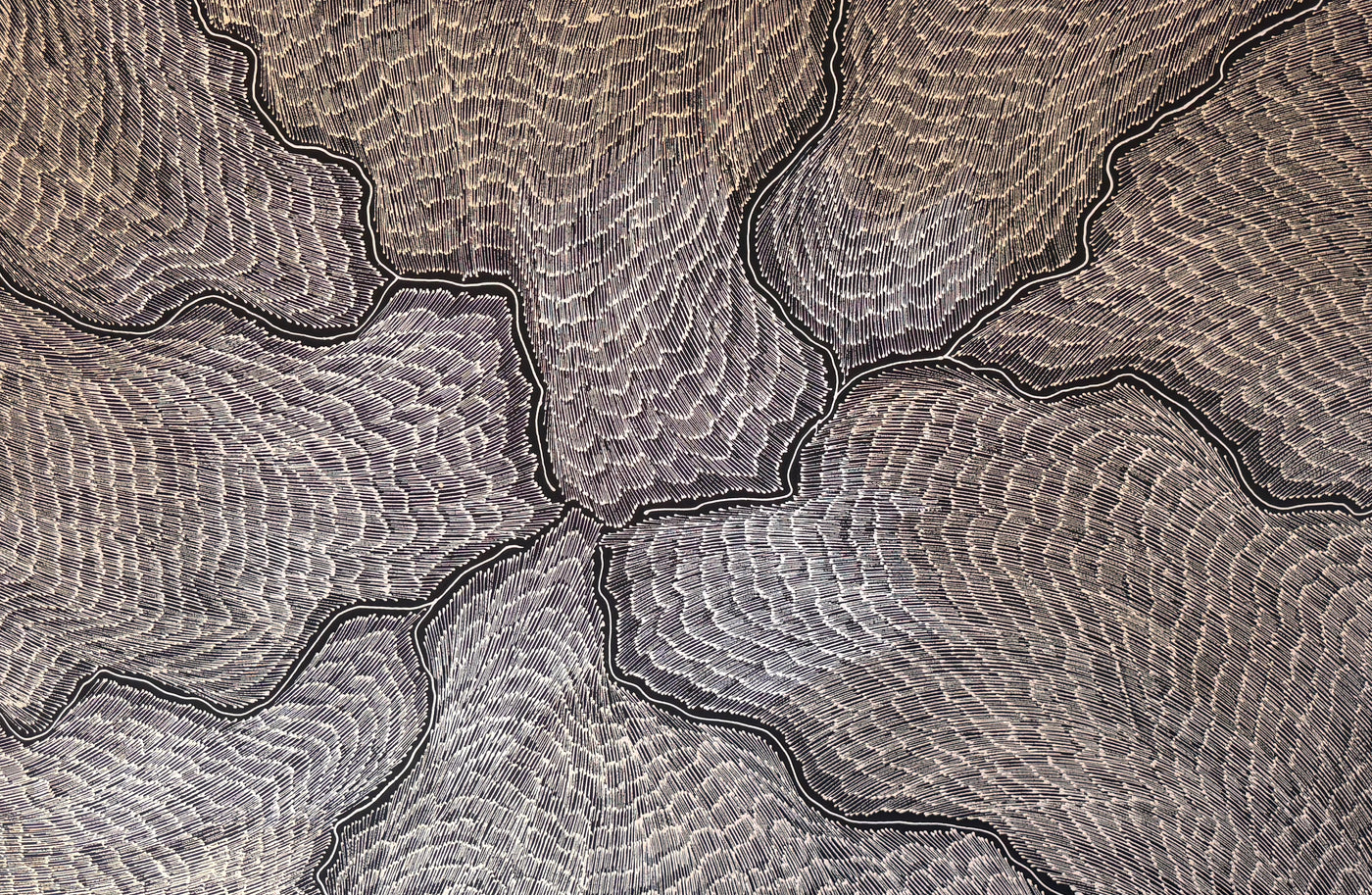
Original Aboriginal art can become a striking focal point in a living room, hallway, office or gallery space. These are works currently in the collection, in a range of sizes and shapes — each one links through to its full details.

Buying Aboriginal art
How to buy Aboriginal art with confidence
Buying guide
Ask where the painting came from, when it was made and how the artist was paid. Ethical sellers can answer clearly. Works bought from an artist or through a community art centre, with the artist's name, Country and year recorded, are the easiest to trace. The Indigenous Art Code, a voluntary code of conduct for dealers that began in 2009, publishes a register of member businesses you can search.
A Certificate of Authenticity should name the artist, title, size, medium, year and a catalogue number that matches the work. A photo of the artist with the finished painting is useful supporting evidence. Keep both together: they matter if you ever sell, insure or donate the work.
Start with what draws you in, whether a family of painters, a subject such as bush medicine leaves, or a palette. If a painting's story matters to you, ask for the artist's own description rather than a general interpretation, because the meaning of a painting belongs to the artist and their community.
Measurements on our site are in millimetres, width by height. Measure your wall and allow space around the work; tape the outline to the wall before you decide. Many works are sold unstretched, so allow for stretching or framing by a local framer.
Both are used by desert artists. Linen is a finer, more stable support and is common for higher-value works; canvas is lighter and generally less expensive. Each listing states the material.
Under Australia's resale royalty scheme, a 5% royalty is payable to the artist or their estate on eligible commercial resales of $1,000 or more, administered by Copyright Agency. Ask the seller how this is handled.
Frequently asked questions
From galleries and art centres that can tell you exactly where each work came from. Look for the artist's name, Country and year on every listing, a Certificate of Authenticity, and a seller willing to answer questions about how the artist was paid. You can buy from us online, by phone on 0458 484 458, or in person.
An original is a unique painting made by the named artist, not a print or reproduction. Check the listing describes the medium (for example acrylic on linen), that the size and catalogue number match the certificate, and that the work is signed or documented.
There is no single meaning. Aboriginal art comes from hundreds of distinct cultures, and a painting's story belongs to its artist and their community. Some stories can be shared publicly and some cannot. Where an artist has shared the story of a painting, we include it on the listing.
Clear provenance, a certificate, an artist whose work you connect with, the right size for your space, and a seller with a fair return policy.
Yes. Our works are supplied with a Certificate of Authenticity and, for most works, a photo of the artist with the painting.
Yes. We ship within Australia and worldwide; international buyers can request a quote from any artwork page. See our shipping page for details.
Yes. You have 7 days to live with the work. If you do not love it, contact us and we will arrange collection and refund the purchase price; return freight is at your cost. See our 7-day policy.
Caring for your painting
Choose an interior wall away from direct sunlight, heat sources such as fireplaces and ducted vents, and damp rooms like bathrooms. Stable temperature and humidity matter more than anything else for a painting on canvas or linen. Larger works are heavy once stretched, so fix them to studs or use appropriate wall anchors rather than a single picture hook.
It can. Ultraviolet light breaks down pigments over time and also weakens canvas and linen. Keep works out of direct sun, and be mindful that a wall which is shaded in winter may catch hard light in summer. If a sunny position is unavoidable, talk to a framer about UV-filtering glazing.
Dust very lightly with a clean, soft, dry brush. Never use water, household cleaners, sprays or a damp cloth: acrylic paint surfaces are porous and can be marked or lifted permanently. For anything beyond dust, such as a stain, mould or a scuff, speak to a professional art conservator rather than attempting a repair.
Roll it, never fold it. Use a wide tube, the larger the diameter the better, and roll with the painted side facing outwards so the paint layer is not compressed. Interleave with acid-free tissue and store flat or upright somewhere dry and stable.
Stop handling it and photograph the damage. Contact a professional art conservator, who is trained in treatment, rather than a framer. If the work came from us, let us know and we will help you work out the best course of action.
Framing and display
Each listing states which it is. Many desert paintings are sold unstretched, meaning the canvas or linen is supplied rolled rather than mounted on a timber frame. It keeps freight costs down and lets you choose how the work is presented.
Any competent local framer can do it. Ask for a timber stretcher sized to the painted area, and mention that there will be an unpainted margin around the image to wrap around the frame. It is worth taking the work to a framer who has handled paintings on linen before.
Usually not. Acrylic on canvas or linen is normally displayed without glazing, which lets you see the texture of the brushwork. Glass is worth considering only in a difficult environment, such as a very sunny room or a high-traffic space.
A float frame holds a stretched canvas so that a small gap is visible between the edge of the painting and the frame, making the work appear to sit inside it rather than be covered by it. It is a common and sympathetic choice for desert paintings.
Measurements are given in millimetres, width by height, and describe the painted area. For unstretched works there is additional unpainted canvas around that area for stretching, so allow for it when planning a wall or ordering a frame.
Shipping and delivery
See our shipping page for current details. International buyers can request a quote from any artwork page and we will come back to you with a price for your destination.
Yes. Works are sent with tracked delivery within Australia and overseas, so you can follow the parcel through to arrival.
Possibly, if you are outside Australia. Any duties, taxes or customs charges raised in the destination country are set by that country and are the buyer's responsibility, and they are not included in the purchase price. Your local customs authority can tell you what applies.
It depends on the destination and whether the work needs to be rolled or crated. Ask us about a particular painting and we will give you a realistic timeframe before you buy.
Yes. You can buy from us online, by phone on 0458 484 458, or in person. Get in touch and we will arrange a time to show you what we have.
Artists, stories and copyright
Where an artist has shared the story of a work, we include it on the listing in their own terms. Where they have not, we do not invent one. The meaning of a painting belongs to the artist and their community, and some knowledge is not for public telling.
No. Buying the physical painting does not transfer copyright, which stays with the artist and passes to their estate. You own the work and can display it, sell it on or lend it, but reproducing the image is a separate matter.
Photographing a work you own for your own records, or to show family and friends, is ordinarily fine. Reproducing it commercially, for example on products, in advertising or in a publication, needs the permission of the copyright holder. Ask us and we can point you in the right direction.
Country means the particular land an artist belongs to, together with the stories, waters, sites and responsibilities that come with it. It is capitalised because it refers to a specific place and relationship, not scenery or countryside in general.
It identifies the community and tradition an artist paints from. Anmatyerre, Pitjantjatjara and Pintupi, for example, are distinct peoples with their own languages, Country and visual traditions. Knowing the language group tells you far more about a painting than the word Aboriginal on its own.
Personal assistance
Need Help Choosing an Aboriginal Painting?
Looking for a particular Aboriginal artist, painting style or artwork size? Our gallery can help you explore available original paintings and find artwork suited to your preferences.
Find the painting that belongs on your wall
Browse every available work, or tell us what you are looking for and we will search the stockroom for you. Or call us on 0458 484 458.